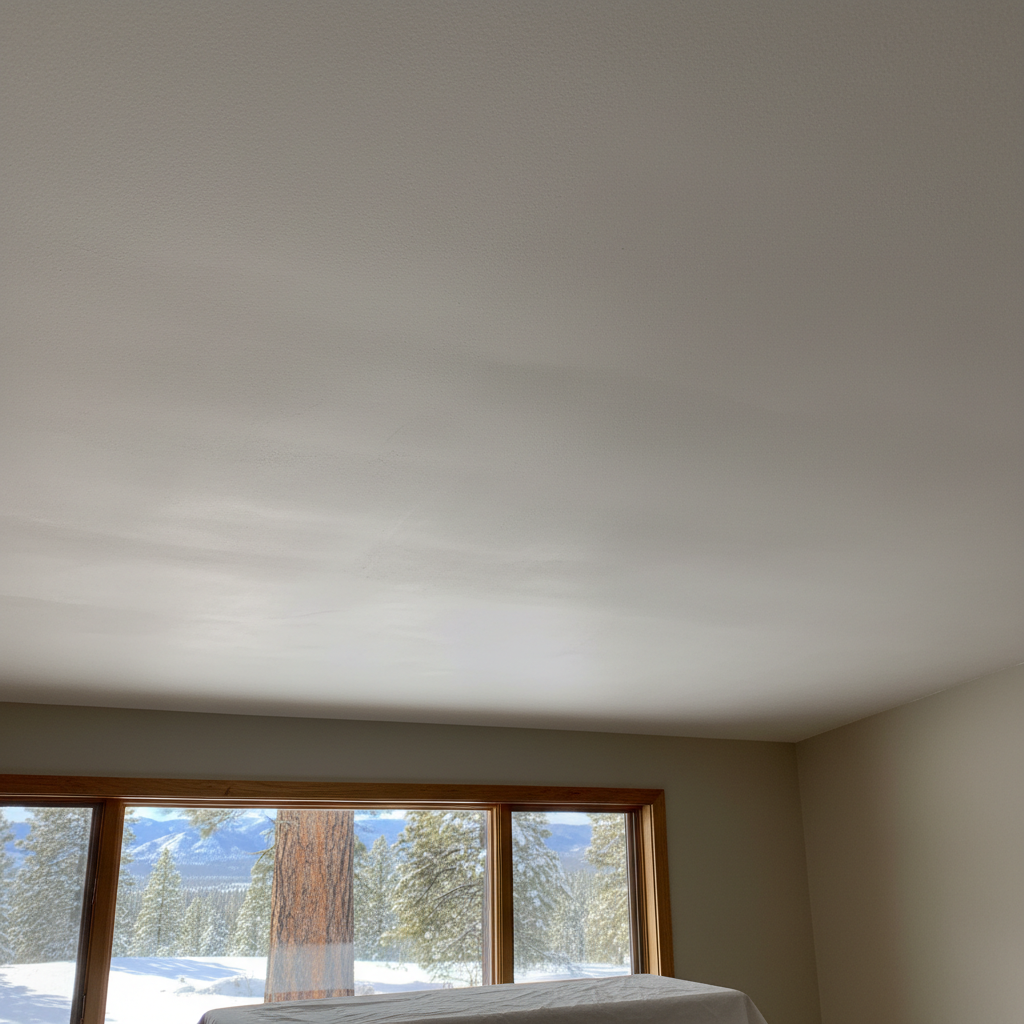
Alright, let's talk about popcorn ceilings. If you've got them, you probably hate them. They're dated, they collect dust like crazy, and frankly, they just make a room feel smaller and darker. I get calls all the time from folks around McCall – from those older cabins near Payette Lake to the newer builds up in Spring Mountain Ranch – asking about getting rid of these things. It's a common project, and for good reason. Here are the most frequent questions I hear, and what you really need to know.
Is popcorn ceiling removal a DIY job, or should I hire a pro?
Look, I'm a firm believer that if you're handy and you've got the time, some home projects are totally doable yourself. But popcorn ceiling removal? This one's usually best left to the pros, especially if your house was built before the late 70s. Why? Asbestos. We'll get into that more in a bit, but that's the big one. Even without asbestos, it's incredibly messy, physically demanding, and if you don't know what you're doing, you can easily damage the drywall underneath. You're working overhead, spraying water, scraping, and then you've got to deal with all that wet, heavy gunk. Plus, after it's scraped, you're looking at a whole new level of finish work – patching, sanding, priming, and painting. It's not just scraping; it's a full ceiling renovation, believe me.
How do I know if my popcorn ceiling contains asbestos?
This is the most critical question you can ask. If your house was built before 1978, there's a significant chance your popcorn ceiling contains asbestos. It was a common additive back then for fire resistance and texture. You absolutely cannot tell if it has asbestos just by looking at it. The only way to know for sure is to get it tested by a certified lab. It's a simple process: you take a small sample (carefully, following safety guidelines, or have a pro do it), send it in, and they'll give you a definitive answer. Don't skip this step. Seriously. Disturbing asbestos without proper containment and safety gear is a major health risk. If it tests positive, then you're looking at a specialized asbestos abatement contractor, not just a drywall guy like me for the removal part.
What's the typical process for removing popcorn ceilings?
Assuming no asbestos, here's how it generally goes down. First, we clear out the room completely, or at least move everything to the center and cover it with heavy plastic. We're talking walls, floors, light fixtures, everything gets draped. This is a super messy job. Then, we lightly mist sections of the ceiling with water – you don't want to soak it, just soften it up enough for scraping. We let it sit for a bit, then use a wide scraper to carefully remove the texture. It's a slow, methodical process to avoid gouging the drywall. Once all the popcorn is off, the real work begins: inspecting the drywall for damage, patching any imperfections, skim coating to get a perfectly smooth surface, and then sanding. After that, we prime. Finally, it's ready for paint. It's a multi-day process, not a one-and-done.
How long does the whole process take, and how much disruption should I expect?
The timeline really depends on the size of the room and the condition of the ceiling underneath. For an average-sized room, you're usually looking at 2-4 days from start to finish. That includes all the prep, scraping, patching, sanding, and priming. If it's a whole house, well, that's obviously longer. As for disruption, expect a lot. The room will be unusable during the work. There's dust, even with all our containment efforts, and noise from scraping and sanding. We do our best to seal off the work area, but you'll definitely notice we're there. It's not a quiet, clean job, but the end result is worth it.
What kind of finish can I expect after removal?
Once the popcorn is gone, you've got options. Most people opt for a smooth, flat finish. It's clean, modern, and makes rooms feel much more open. We achieve this by skim coating, which is basically applying a thin layer of joint compound over the entire ceiling to get it perfectly smooth, then sanding it down. You could also go for a light texture if you prefer, like a skip trowel or orange peel, but smooth is definitely the most popular choice these days. Whatever you pick, it'll look a hundred times better than that old popcorn.
What are the main benefits of getting rid of popcorn ceilings?
There are a few big ones. First, aesthetics. It instantly updates your home, making it feel more modern and spacious. Second, cleanliness. Popcorn ceilings are notorious dust collectors, and they're a pain to clean. A smooth ceiling is much easier to maintain. Third, light reflection. A smooth, light-colored ceiling reflects light better, making your rooms brighter. Fourth, resale value. It's a definite upgrade that buyers notice. Nobody's looking for a house with popcorn ceilings anymore. It's one of those projects that gives you a lot of bang for your buck, both in terms of your enjoyment of your home and its market appeal.
So, if you're tired of those old ceilings, give us a call at New Look Drywall. We've done plenty of these jobs around McCall, and we can help you figure out the best approach for your place.