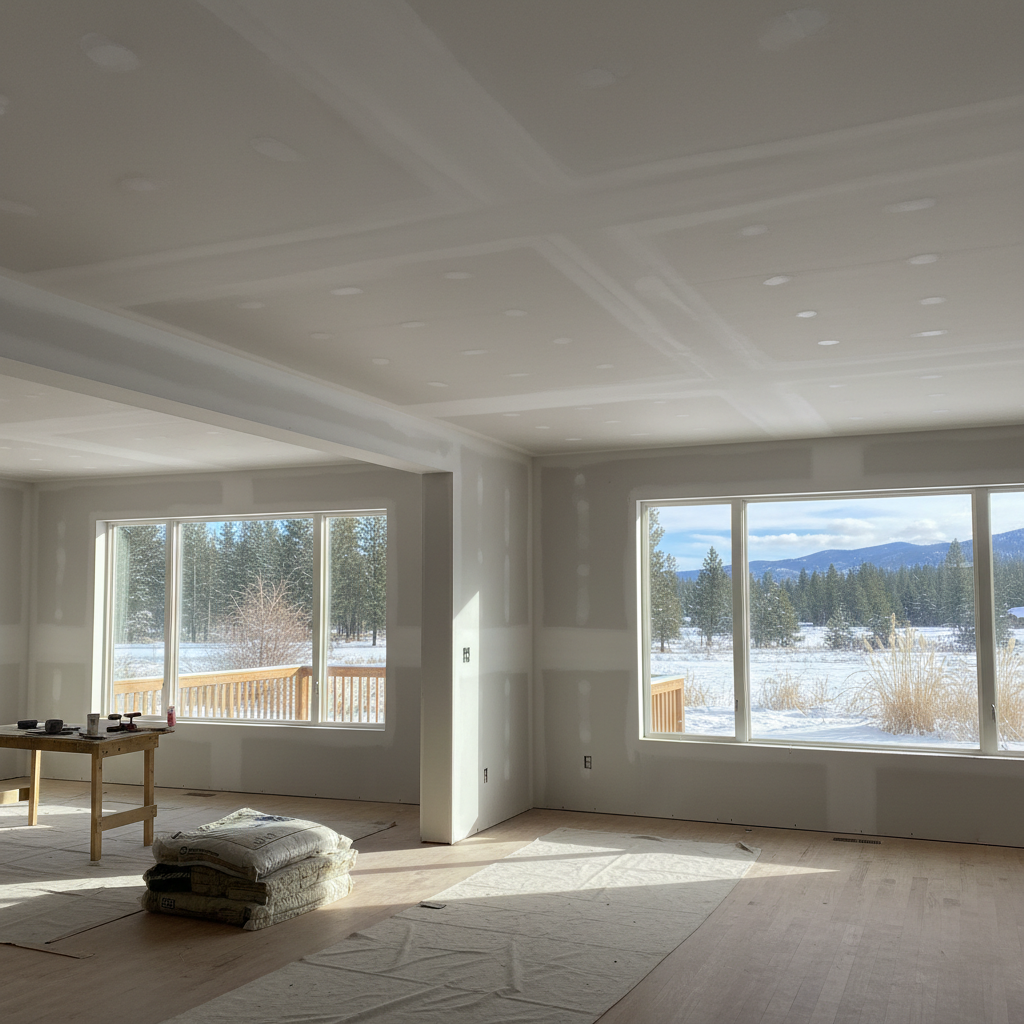
Alright, let's talk about drywall in McCall. If you live here, you already know our weather. It's beautiful, no doubt about that, but it can also be a real challenge when you're trying to get a construction project finished up the right way. When it comes to drywall specifically, our unique climate isn't just background noise; it's a major factor. Getting your drywall installed correctly means really understanding how our seasons impact the work, which is something many people overlook.
When's the Best Time to Schedule Drywall in McCall?
Honestly, there isn't one single "perfect" time, but some seasons are definitely easier than others, generally speaking. Our summers, running from June through September, are usually warm and dry, with lower humidity levels. This often provides a great window for drywall work, and it's a good time to get things done. The moderate temperatures and lower humidity mean joint compound can cure properly without too much fuss, which is key. You won't be fighting extreme cold or super high moisture levels that can mess with drying times and the overall finish, which is a common headache.
Winter, on the other hand, brings its own set of challenges, as anyone who lives here knows. We get a lot of snow and cold temperatures. You might think the dry indoor air from heating would be a good thing, but it can actually get too dry, causing materials to shrink too fast. Plus, those freezing temperatures outside mean we've got to be extra careful. If you're planning a winter project, we'll need to maintain specific indoor temperatures, usually above 50-55°F, for days before, during, and after installation. This often means running temporary heat, which adds to the cost and complexity, something to keep in mind. That said, if you're doing an indoor renovation and your home is already enclosed and heated, winter can still work out, and sometimes contractors even have more availability then.
How McCall's Weather Conditions Affect Drywall Work
The two big factors we're always watching are temperature and humidity. They're like the main characters in whether your drywall turns out great or causes problems.
Temperature Swings
Our temperatures here in McCall can swing pretty wildly, especially between day and night, even during the spring and fall. Drywall and joint compound are sensitive to that kind of change. Ideally, we want temperatures to stay between 55°F and 75°F. If it's too cold, below 50°F, joint compound takes forever to dry, and it can even freeze, which is a disaster, frankly. If it's too hot, above 95°F, it can dry too quickly and crack. We've really got to keep things consistent. This is particularly true for new construction in places like the Whitetail area, where homes are often exposed to the elements until they're fully enclosed. We can't even think about hanging board until the building is properly sealed up and we can control the interior climate, which makes sense.
Humidity Levels
Humidity is another really important one. The sweet spot for relative humidity during installation is usually around 40-60%. McCall's summers tend to be dry, with humidity often dipping to 45% in July and August. That's great for drying, honestly. Our winters, though, can see humidity levels above 65%, sometimes as high as 92%. High humidity means the joint compound dries slowly, which can lead to issues like shrinking, cracking, or even mold if things get too damp. Too low humidity, which can happen indoors when we're blasting the heat in winter, can cause the drywall to dry out too quickly and crack, leading to other issues.
So, what does all this mean for you? It means we might need to use temporary heaters or dehumidifiers to keep the conditions just right. Proper ventilation is also key, no matter the season, to allow moisture to escape and air to circulate through the space.
Protecting Your Drywall Investment Year-Round
Once your drywall is up and finished, you want it to last a long time. Here's how you can help protect it from McCall's climate extremes:
- Maintain consistent indoor temps: Try to keep your home's temperature stable year-round. Big fluctuations can cause expansion and contraction in the drywall, leading to hairline cracks over time, which nobody wants.
- Control humidity: This is a big deal. In our dry summers, you might not need to worry much, but in winter, running a humidifier can prevent the air from getting too dry and causing wood and drywall to shrink. Conversely, if you notice any dampness or high humidity, especially in bathrooms, kitchens, or basements, use exhaust fans and consider a dehumidifier.
- Make sure you have good ventilation: Always use exhaust fans in bathrooms and kitchens to vent out moisture from showers and cooking. Proper airflow prevents moisture buildup that can lead to mold or damage.
- Seal up leaks: Check around windows, doors, and your roof regularly. Water leaks are drywall's worst enemy, period. Even a small leak can cause significant damage and mold growth.
- Address issues quickly: If you see any signs of water damage, cracks, or discoloration, don't wait around. The sooner you deal with it, the less likely it is to become a bigger, more expensive problem down the road.
At New Look Drywall, we've honestly seen it all when it comes to McCall's climate and its impact on homes. We know what it takes to get drywall installed right, so it holds up for years to come. If you've got questions about your next project, give us a call. We're happy to talk through the best approach for your home and our local conditions, because every situation is a little different.