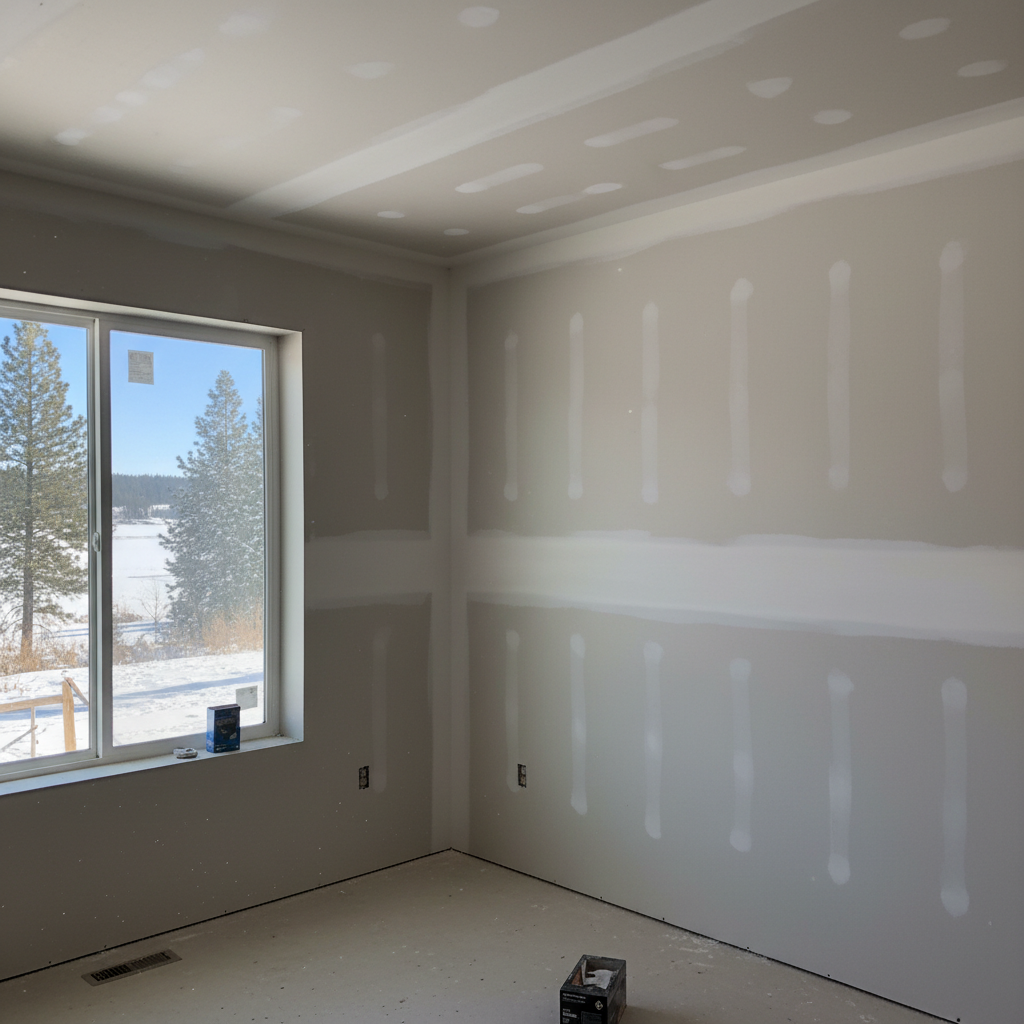
Let's talk about drywall finishing costs here in McCall. You know, it's one of those things where people often get a number thrown at them and don't really understand what goes into it. I'm going to pull back the curtain a bit, show you what you're actually paying for, what drives the price, and how to make sure you're getting a good deal.
What Even IS Drywall Finishing?
First off, finishing isn't just hanging the sheetrock. That's a whole different ballgame, believe me. Finishing is all about making those seams vanish, getting the corners super sharp, and making the wall perfectly smooth and ready for paint. It's an art, really. We're talking about taping, mudding, sanding, and then doing it all again, sometimes three or four times, until it's flawless. This is the difference between a professional job and a DIY headache, plain and simple.
What Affects the Price Tag?
A few big things make the cost of drywall finishing go up or down. You really need to think about these when you're getting quotes:
- Level of Finish: This is probably the biggest factor, no contest. There are different 'levels' of finish, from Level 0 (just hung, no finishing at all) all the way up to Level 5 (the smoothest, most perfect finish you can get). Most homes around here, especially in places like the Spring Mountain Ranch area with all those big windows and natural light, need at least a Level 4 or 5. A Level 3 is okay for a garage or a closet, sure, but you'll see every imperfection under direct light. A Level 5 takes more time, more mud, more sanding, and more skill, so it costs more.
- Job Size: Bigger jobs usually get a slightly better per-square-foot rate. It's just more efficient for us to set up for a 2,000 sq ft house than for a tiny 200 sq ft repair.
- Complexity: Lots of corners, arches, vaulted ceilings, niches, or intricate designs? Yeah, that's going to add time and cost. Simple, flat walls are quicker and cheaper.
- Condition of Hanging: If the drywall was hung poorly – big gaps, screws sticking out, uneven sheets – it takes us a lot longer to fix all those issues before we can even start finishing. Sometimes, I've seen DIY hanging jobs where it would actually be faster and cheaper to just re-hang the sheets than try to salvage them.
- Location & Access: If we're hauling materials up three flights of stairs or working in a tight, awkward space, that adds to the labor.
- Material Costs: While labor is the biggest part of the bill, the cost of tape, mud, and corner bead does change sometimes.
Typical Costs in McCall, ID
Alright, let's get down to brass tacks. These are general ranges for finishing only; they don't include hanging the drywall. These numbers are based on what I've seen and what New Look Drywall typically charges for a good, professional job.
- Level 3 Finish (Garage/Utility Room): You're looking at roughly $0.75 - $1.00 per square foot of wall surface. This is basic, functional. You'll see some tape lines if you look closely.
- Level 4 Finish (Standard Home): This is what most people want for their living areas, bedrooms, and kitchens. It's paint-ready and looks good. Expect to pay around $1.25 - $1.75 per square foot of wall surface. This is a solid, professional finish, no doubt.
- Level 5 Finish (High-End/Smooth Walls): If you've got lots of natural light, dark paint colors, or just want a truly flawless, smooth-as-glass wall, this is it. It involves a skim coat over the entire surface. This will run you about $2.00 - $2.75+ per square foot. It's a premium finish for a premium look.
Remember, these are for the wall surface area, not the floor area of your house. So, a 10x12 room with 8-foot ceilings has about 352 square feet of wall and ceiling surface (not counting doors/windows, which we usually figure in as part of the complexity). That room, for example, might cost you $440-$616 for a Level 4 finish.
What's Included in a Quote?
When I give you a quote, here's generally what's covered:
- All labor for taping, mudding, and sanding to the agreed-upon finish level.
- All necessary materials: joint compound (mud), tape, corner bead, and so on.
- Basic site protection (like laying down drop cloths).
- Cleanup of our drywall-related debris. We're not doing a full construction site cleanup, but we'll leave our work area tidy.
What's usually NOT included (unless specified):
- Drywall hanging.
- Texturing (that's a separate step after finishing).
- Paint.
- Extensive repairs to poorly hung drywall (we'll quote that separately if needed).
- Hauling away large amounts of old drywall or construction debris.
How to Avoid Overpaying
You don't want to get ripped off, and you shouldn't. Here's my advice:
- Get Multiple Quotes: Always get at least three. But don't just go with the cheapest. The cheapest quote often means corners are being cut, and you'll pay for it later in touch-ups or a bad-looking wall.
- Be Specific About Finish Level: Make sure every contractor is quoting for the same level of finish. If one quotes Level 3 and another Level 4, their prices will be different, but you're not comparing apples to apples, are you?
- Ask for References and See Work: A good contractor will be proud to show you their finished projects. Go look at them. Run your hand over the walls. See if you can spot seams or bumps.
- Get Everything in Writing: What level of finish? What's included? What's not? What's the timeline? Get it all down.
- Don't Pay Upfront: A reputable contractor might ask for a small deposit for materials on a big job, but never pay the full amount until the work is complete and you're satisfied.
Drywall finishing is a big part of how your home looks, so it's worth doing right. Don't cheap out on the finishing, or you'll be staring at those wavy walls for years to come. If you've got questions about a project in McCall, give us a call at New Look Drywall. We're happy to talk you through it.