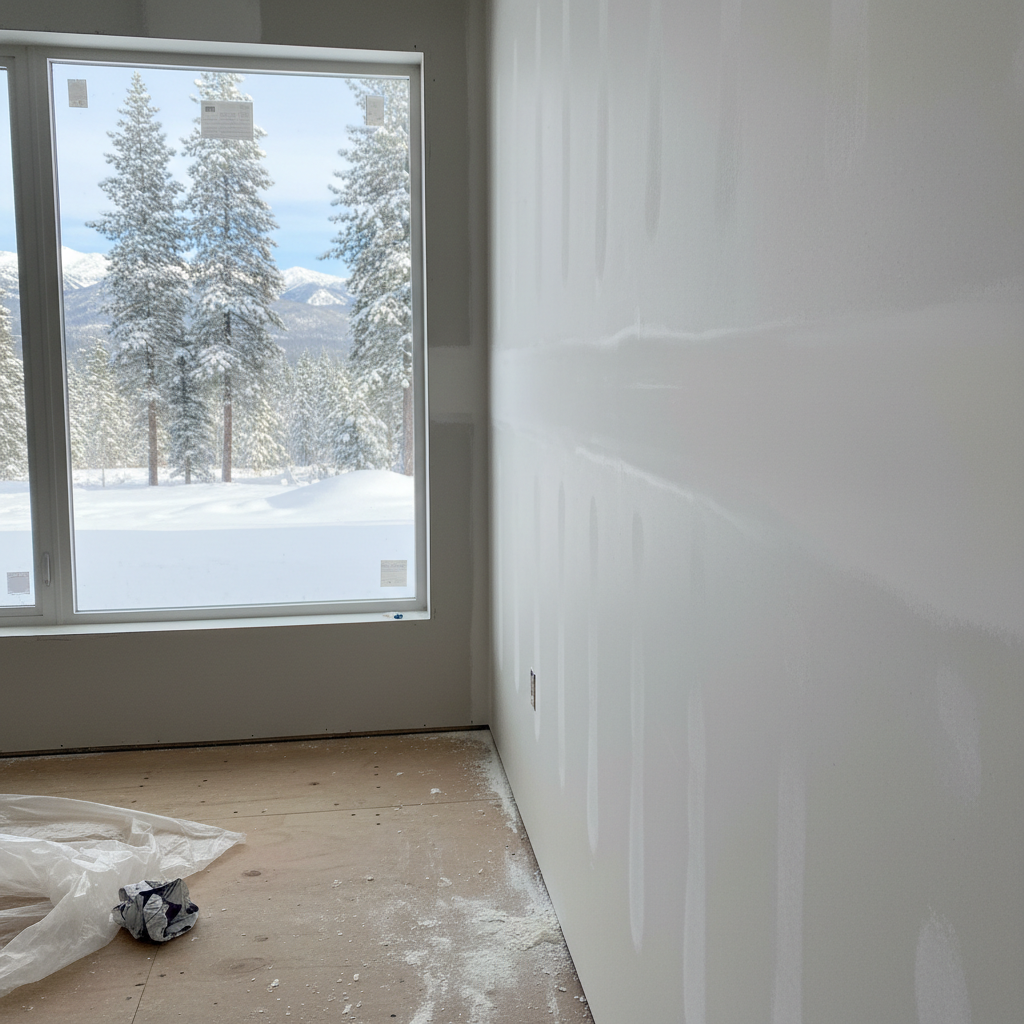
Alright, let's talk drywall. I get a lot of the same questions from homeowners around McCall, whether they're building new up on the hill or just doing a renovation downtown. It makes sense, too; drywall is one of those things that looks simple but can really make or break the finish of your home. So, I figured I'd just lay out the answers to the most common stuff I hear. No fluff, just what I've learned over the years.
How long does it actually take to hang drywall?
This is probably the number one question I get. And honestly, it's like asking how long it takes to drive to Boise – depends on where you're starting and what you're driving. For drywall, it depends on a few big things: the size of the job, the complexity of the layout, and how many guys are on the crew. A simple, rectangular room is way faster than a house with vaulted ceilings, lots of angles, or a bunch of cutouts for windows and doors. Generally, for an average-sized room, say 12x15 feet, hanging the boards might take a day for a couple of experienced guys. But that's just hanging. Taping, mudding, and sanding – that's a whole different ballgame and usually takes several days, sometimes a week or more, because of drying times between coats. Don't let anyone tell you it's a one-day job for the whole process. It ain't.
What's the difference between 1/2-inch and 5/8-inch drywall? When should I use which?
Good question, and it's important. Most residential walls use 1/2-inch drywall. It's lighter, easier to work with, and perfectly adequate for most applications. You'll see it everywhere. Now, 5/8-inch drywall, that's your heavy-duty stuff. It's thicker, denser, and offers better fire resistance and soundproofing. We use it a lot on ceilings, especially if the joists are spaced 24 inches apart, because it sags less. You'll also find it in garages or between living units where fire codes require it. If you're building a home near the lake, where sound transmission might be a bigger concern, or if you've got a home theater, 5/8-inch can be a good upgrade for sound dampening too. It costs a bit more and is harder to handle, but sometimes it's worth it.
Do I need to worry about moisture-resistant drywall in McCall?
Absolutely, you do. McCall gets its share of snow, and that means moisture. While you won't use green board (moisture-resistant drywall) on every wall, it's critical in certain areas. Any bathroom, laundry room, or kitchen where there's a shower, tub, or sink should have it. It's specifically designed to resist moisture and mildew, which is a big deal in our climate. Regular drywall will just wick up moisture, soften, and eventually grow mold. Trust me, you don't want to deal with that down the road. It's a small extra cost upfront that saves you a huge headache later. We always recommend it for those high-humidity spots.
What's the deal with drywall screws vs. nails?
Okay, this one's easy: always use screws. Always. Back in the day, nails were common, but they have a nasty habit of 'popping' out over time as the wood framing expands and contracts with changes in temperature and humidity. Here in McCall, with our big temperature swings from summer to winter, nail pops are a real problem. Screws hold the drywall much more securely to the studs and joists, preventing those annoying little bumps and cracks that show up a year or two after the job is done. It's a bit slower for the installer, but the finished product is way better and lasts longer. New Look Drywall only uses screws, no question about it.
Can I hang drywall myself, or should I hire a pro?
Look, I'm not going to tell you you can't hang drywall yourself. Plenty of folks do. But here's the honest truth: getting a truly smooth, professional finish is incredibly difficult for an amateur. It's not just about putting up sheets; it's about precise cuts, proper screw placement, and most importantly, the taping and mudding. Feathering out those joints perfectly, avoiding humps and valleys, getting those corners crisp – that takes a lot of practice and a good eye. If you're doing a small closet or a utility room where aesthetics aren't critical, go for it. But for main living areas, especially if you're planning on a smooth wall finish (not textured), I'd strongly recommend hiring someone who does it every day. A bad drywall job will show through every coat of paint, forever. It's often the difference between a house looking custom-built and looking like a DIY project.
What causes cracks in drywall, and how can I prevent them?
Cracks are a pain, right? Most cracks in drywall, especially in a new build or a major reno, are due to structural movement. Wood framing dries out and shrinks, or the ground shifts a tiny bit, and that puts stress on the drywall. Here in McCall, with our variable soil conditions and heavy snow loads, a little movement isn't uncommon. Poor framing, insufficient fasteners, or not enough mud on the joints can also contribute. To prevent them, first, make sure your framing is solid and properly braced. Second, use screws, not nails, as I mentioned. Third, apply enough coats of mud and tape correctly to create strong joints. Sometimes, using flexible corner bead can help in high-stress areas. If you're seeing persistent cracks, especially long ones or ones that recur after repair, it might be a sign of a larger structural issue that needs looking at.
What's the deal with different drywall textures?
When it comes to texture, you've got options, and it really sets the tone for a room. The most common textures you'll see around here are smooth, orange peel, and knockdown. A smooth finish is exactly what it sounds like – perfectly flat and uniform. It's the hardest to achieve and shows every imperfection, but it looks really clean and modern. Orange peel is a light, subtle texture that looks like, well, an orange peel. It's sprayed on and helps hide minor flaws, making it a popular choice. Knockdown is a bit heavier; it's sprayed on like orange peel but then lightly 'knocked down' with a trowel, creating a flatter, more irregular pattern. It's great for hiding imperfections and adds a bit of visual interest. There are also hand-troweled textures, but those are less common for general applications. Your choice usually comes down to personal preference and the style of your home. Just remember, the smoother the finish, the more critical the prep work needs to be.
Hopefully, that clears up some of your questions. Drywall isn't rocket science, but getting it right takes experience and attention to detail. If you've got more questions or need a hand with a project, you know who to call.