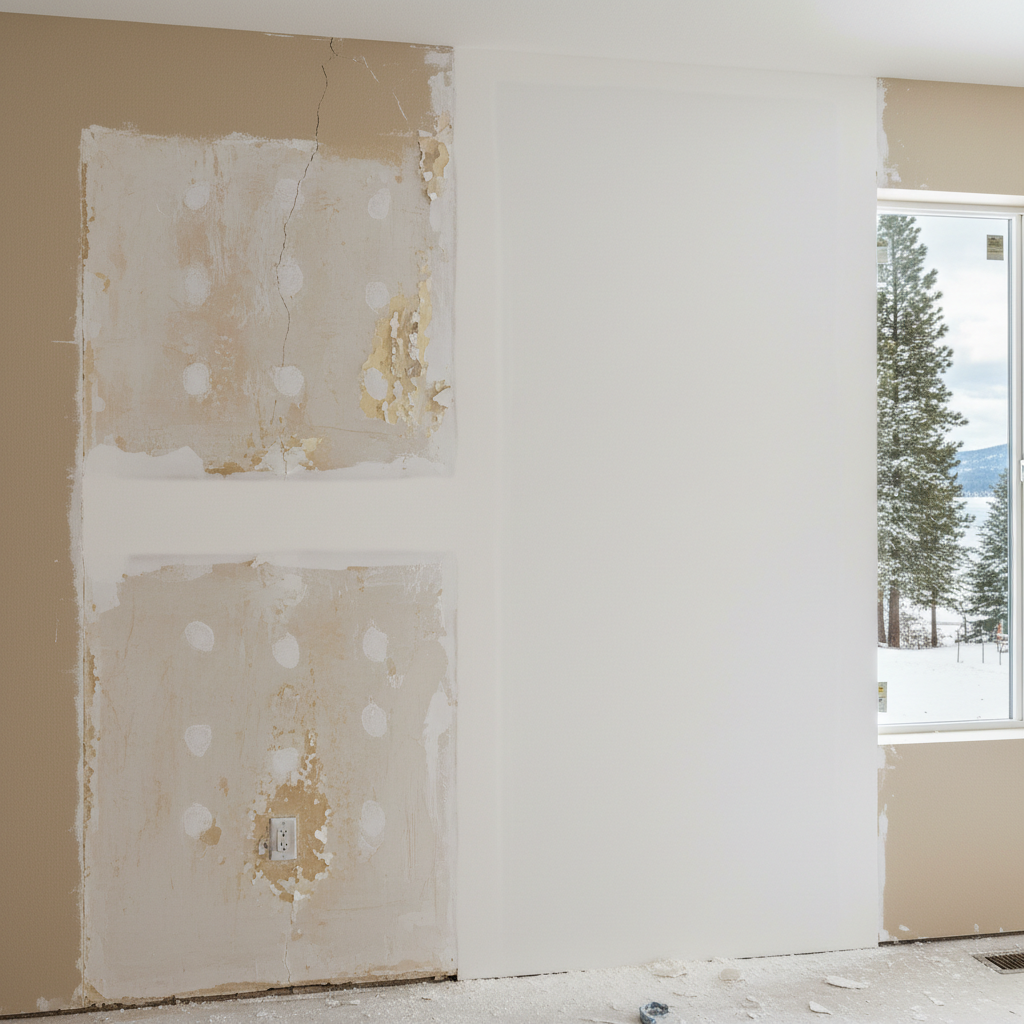
Alright, McCall homeowners, let's talk about those walls for a minute. Sooner or later, something always seems to happen – maybe a doorknob punches through, a picture takes a dive, or you just notice some general wear and tear. When that drywall gets dinged up, you're usually faced with a choice: do you try to patch it up yourself, or is it time to cut out a bigger section and replace it entirely? It's not always a simple answer, honestly. And getting it wrong can mean more work and more money down the road, which nobody wants.
I've seen pretty much everything working on homes around here, from the older, rustic cabins up on Payette Lake to the shiny new builds in Spring Mountain Ranch. The right approach for your place really depends on a few key things: the size and specific type of damage, what kind of finish you're hoping for, and frankly, how much hassle you're willing to deal with. It's a personal call, after all.
The Quick Fix: Drywall Patching
When I mention patching, I'm generally talking about fixing smaller holes, those annoying cracks, or minor dents. This usually involves using joint compound (most folks just call it mud), some tape, and sometimes a small patch kit. Think about those little nail holes, a scuff mark, or a small ding you get from moving furniture around. Pretty common stuff, really.
Cost
This is usually the most budget-friendly option, which is nice. For small repairs like those nail holes or minor cracks, your material costs are pretty minimal if you decide to do it yourself – maybe $10 to $50 for a basic kit. If you call a pro for a small patch, it might run you anywhere from $100 to $300. But often, contractors have a minimum service fee, so it could easily be on the higher end of that range, or even more, for just one tiny spot. It's less labor-intensive, and that's what helps keep the costs down, generally speaking.
Durability
For small, cosmetic damage, a patch done correctly can actually be quite sturdy. The key phrase there is 'done correctly,' of course. If the drywall underneath is solid and the damage is just on the surface, a good patch will hold up for years. However, if you're trying to patch over something that's structurally compromised, like soft drywall from water damage, it just won't last. It's like putting a band-aid on a broken bone.
Maintenance
Once it's patched, sanded smooth, primed, and painted, the maintenance is pretty much the same as the rest of your wall. Just keep an eye on it, that's all. If cracks start reappearing in the exact same spot, that's a clear sign there's a deeper issue at play that a simple patch isn't going to fix.
Appearance
A skilled hand can make a small patch virtually disappear, which is always the goal. The real challenge often comes with matching textures. Most homes here in McCall have some kind of texture, whether it's that orange peel look, knockdown, or even a smooth finish. Blending a patch smoothly into an existing texture takes real practice, and if it's not done right, you'll see it every single time the light hits that wall. That's often where New Look Drywall really helps out – making sure that repair blends in perfectly, like it was never there.
The Bigger Job: Cutting Out and Replacing
This approach involves removing a larger, damaged section of drywall and then installing a brand new piece (or even a full panel) right in its place. This is what you'll need for bigger holes, extensive cracks, any kind of water damage, or areas where the drywall itself has just lost its integrity. Sometimes you just need to start fresh.
Cost
Replacing a section is generally more expensive than just a small patch. You're going to use more material – sometimes a whole 4x8 sheet, which adds up – and it definitely requires more labor to cut, fit, screw, tape, and mud that new piece in. For a medium repair (say, patching a larger hole or replacing a small section), you might be looking at $300 to $800. If the damage is really extensive, like a whole wall or ceiling that's been hit by water, costs can go up significantly, potentially $1,000 or more. It just depends on the scope.
Durability
When the damage is extensive, replacement offers far superior durability. If the drywall is soft, crumbling, moldy, or sagging, trying to patch it is really just a temporary fix. Replacing the compromised section ensures you're starting with sound material, which means a much longer-lasting repair. This is especially true for water-damaged areas, where the gypsum core can weaken and lead to future sagging or staining if it's not fully replaced. You want it to hold up, right?
Maintenance
Once a section is properly replaced, it should behave just like the original wall. You're effectively getting a 'new' section of wall, which is great. The main thing is to address the root cause of the damage first – especially with water issues. If you don't fix the leak, you'll just be replacing that drywall again soon, and that's a waste of time and effort.
Appearance
This is where replacement often shines, especially for larger damage. When you cut out a clean square or rectangle and install a new piece, it's actually easier to get a truly smooth finish. The edges are straight, making taping and mudding much more consistent. With proper finishing techniques, including careful feathering and texture matching, that replaced section can become indistinguishable from the rest of the wall. It can look really good.
My Recommendation for McCall Homeowners
Here's the deal, plain and simple: McCall's climate, with its big temperature swings from cold winters to warm, dry summers, puts a lot of stress on our homes. This constant expansion and contraction can definitely cause cracks, especially around windows and doors, or where the framing might settle a bit. It happens more than you'd think.
For small holes (under 4-6 inches) or hairline cracks that are purely cosmetic and don't involve any underlying structural issues or moisture, a good patch is often enough. You can certainly tackle these yourself if you're handy, but if you truly want it to disappear, especially with textured walls, calling a pro like New Look Drywall is your best bet for a smooth finish. We're experts at matching those tricky textures common in the area, which is a big plus.
However, if you're dealing with anything larger than 6-8 inches, significant cracking, soft or crumbling drywall, or any sign of water damage or mold, you absolutely need to cut out and replace that section. Don't mess around with water damage; it can lead to mold and structural problems quickly, and that's a headache. Patching over compromised drywall is honestly a waste of time and money in the long run. The seasonal movement we experience here in McCall will just make those weak spots fail again. Replacing the section ensures a stable, sturdy repair that can better withstand our local conditions. It's an investment in the longevity and overall appearance of your home, and that's not a small thing.
Ultimately, if you're unsure about what to do, just get a professional opinion. It's always better to know the full extent of the damage and the right fix upfront than to have to redo a repair later. Trust me on that one.